
Where She At AI
“Where she at” is the name of one move from the Burning Bridges AI trend: a hand held flat over the eyes while you slowly look across a crowded party, as if searching for someone. People post AI videos of themselves doing it, made from a single photo.
Updated October 11, 2026
Three frames from a real clip
The move, frame by frame
These stills are cut from a video made on this site from one photo. The person in them is AI-generated.

0:01
The search
One hand above the eyebrows like a sun visor, palm down, eyes still visible under it. He leans in and turns his head slowly across the room.

0:04
Spotted
His eyes stop on the lens. The hand drops, the face opens into a laugh, and he pushes through the guests toward the camera.

0:07
Found you
A point straight at the camera, and behind him the whole room turns and raises its glasses. This is the frame people pause on.
If you try it in another tool
Why AI gets the “where she at” move wrong
A hand raised next to a face is where video models slip most. These are the four usual failures, and the wording that helps with each.
- 1
The hand covers the whole face
The model reads “hand over eyes” as hiding. Say “above the eyebrows, eyes visible”.
- 2
It turns into a salute
A stiff hand at the temple. Ask for a relaxed, flat hand held like a sun visor.
- 3
The head never turns
Without the slow left-to-right look it is just a pose. Give the turn its own seconds.
- 4
Fingers merge or multiply
Hands near faces are hard. “Fingers together” helps; so does trying again.
What we changed
The first version looked like a salute
We made this scene twice. Both stills below are the hand-up moment, from the same photo.

First version: walk in, then the hand
Three seconds of walking came first. When the hand went up he was standing straight and smiling at the camera, so nothing said “searching”. In a blind review, where the reviewer saw only the clip and not our notes, the move was described as a salute and the clip scored 4 to 5 out of 10.
Current version: the search is the first frame
Three things changed. The clip opens with the hand already up. The body leans in and the eyes look away from the lens. And the face is worried, not pleased, until he spots the camera. The same review scored it 6, with the opening rated 6 instead of 3 to 4.
The lesson carries to any tool: the hand is not what sells the move. Where the eyes point and what the face is doing decide whether it reads as looking for someone.
1.5 seconds in, three more photos
How the move holds on different people
The same second of the scene on three other faces. Each was the first render of that photo.
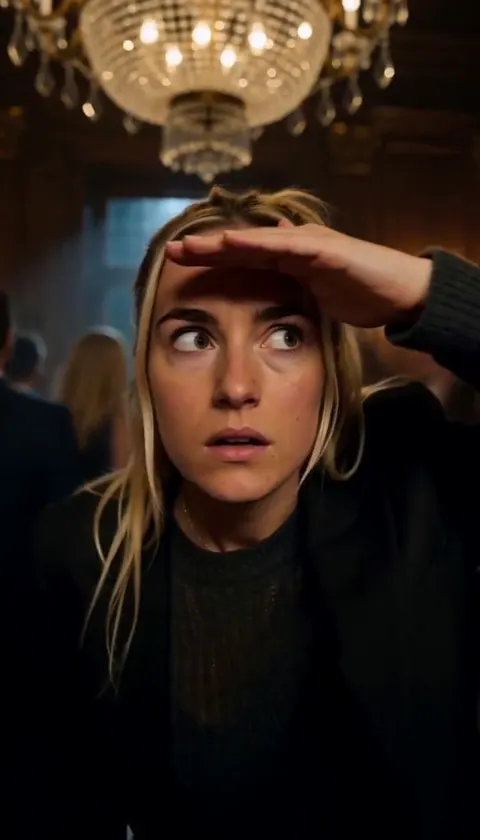
Loose hair falls in front of the shoulder and the hand still lands on the brow, not in the hair.

The hand comes in from the other side. Either hand works; the model picks one.
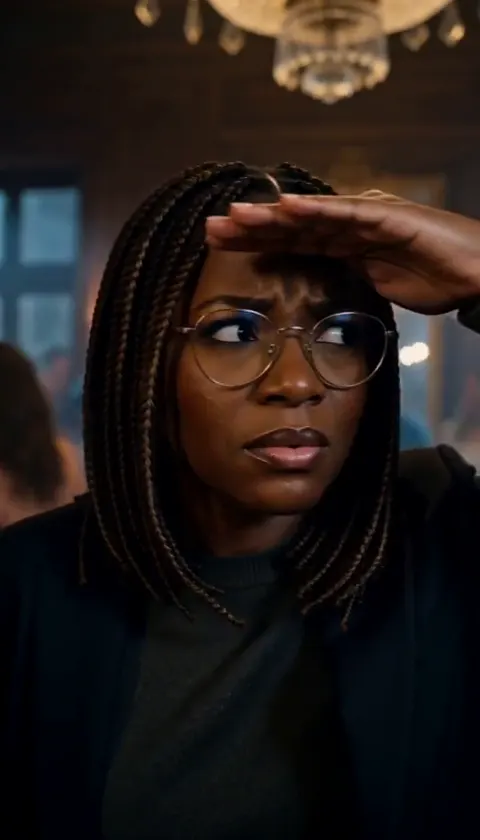
Glasses stay on, and the hand sits above the frames instead of covering them.
The people are AI-generated; no real person’s photo was used for these samples.
Before you upload
The photo that makes the scan work
What we can say from our own renders, and what we have not tried.
SEEN IN OUR RENDERS
Forehead in the picture
The hand lands on the brow, so the model needs to know what is there. All four of our sample photos showed the forehead and both eyebrows.
SEEN IN OUR RENDERS
Face toward the camera
The clip turns your head for you. Start from a straight-on, head-and-shoulders photo and let the scene do the turning.
SEEN IN OUR RENDERS
Glasses are fine
One of our four samples wears round glasses. They stayed on for all eight seconds and the hand went above them.
NOT TESTED
Caps, hoods and sunglasses
We have not rendered these. A cap brim sits exactly where the hand goes and sunglasses hide the eyes the move depends on, so we would use a photo without them.
Read on October 11, 2026
What the biggest “where she at” posts look like
We read about a hundred TikTok posts under the trend, 2.9 million plays between them. The most-watched ones are not one person from a selfie. They put a whole cast into the party: a sitcom office, a mob-drama family, a grid of racing drivers, a set of horror-film characters, each taking a turn at the move.
Posts titled “prompt”, “template” or “CapCut” are mostly tutorials pointing at each other, and few of them show a finished clip.
This site does the other kind: you, alone, as the one searching the room. One photo gives one person in the clip. It does not put several people of your choosing into one video, and it does not copy the original choreography step for step.
Do the scan yourself
On the home page, The Scan is already selected. Add one photo and you get the three frames above with your face. 8s · 9:16 · 720p, with sound, from $9.99. Want to write it yourself instead? The prompt page has the full text.
Before you ask
“Where she at” questions
What does “where she at” mean on TikTok?
In this trend it is the caption for one move: a hand held flat over the eyes like a visor while the person slowly looks across a crowded party, as if searching for someone. It comes from the party scene in Drake’s “Burning Bridges” video, and people post AI versions of themselves doing it.
Is “where she at AI” the same as the Burning Bridges AI trend?
Yes. They are two names for the same clips. “Burning Bridges AI” names the video the scene comes from; “where she at” names the move and is what people write as the caption. A search for either one is looking for the same thing: an AI video of you doing the scan at the chandelier party.
How do I make the “where she at” AI video?
Add one clear photo on our home page and choose The Scan. The clip is 8 seconds: it opens on the scan and holds it for about three seconds, then you spot the camera, push through the crowd and point at it. It takes about 3 to 6 minutes and one video is from $9.99.
Why does the AI keep getting the hand wrong?
A raised hand close to the face is one of the hardest things for a video model: fingers merge, the hand covers the eyes completely, or it turns into a salute. It helps to ask for a flat hand above the eyebrows with the eyes still visible, and to give the move its own block of time. Our scene is written that way.
Which hand, and how long should the scan last?
Either hand works. What reads on a phone screen is a slow turn of the head, not a fast one, held for two to three seconds. Shorter than that and viewers miss it; longer and the clip has no ending.
What caption goes with it?
The simplest is the phrase itself, “where she at”. People also write the situation: who they are looking for, who did not show up, or a joke about arriving late. One short line is enough; the move does the rest.
Can I do it with a friend in the same clip?
Not on this site. One photo makes one person, and the guests around you are part of the scene. The group versions that get the most views put a whole cast into the party and are made with other tools. Two people can each make a clip here and post them as a pair.
Will it work if I wear glasses?
In our renders, yes. One of our four sample photos wears round glasses: they stayed on for the whole clip and the hand sat above the frames. We have not tested sunglasses, and we would avoid them because the move depends on the eyes being visible.